Leave a Message

Thank you for your message. I will be in touch with you shortly.

Buying a home shouldn't be a stressful ordeal. Making the smart move of choosing a REALTOR® is your first step to ensuring that your investment is a great choice. My service and experience is from start to finish as I assist in managing your home purchase to include a step-by-step process starting with home inspection to settlement day, and beyond. I pride myself on repeat business and hope you'll come to understand why.

main

As Your Agent, I will:

  • Complete a comparative market analysis that will compare the home you choose to purchase to the area home sales to ensure the property is not over priced.
  • Refer Local Mortgage Companies that offer the best loan programs; Down Payment & Closing Assistance as well as will provide a finance estimate showing your estimated monthly mortgage payment and out of pocket closing costs, if applicable.
  • Assist with negotiating the best deal for you.

What are closing costs?

At the start of your mortgage loan application, your lender will provide a “official loan estimate”, laying out the expenses associated with processing and finalizing the loan. In addition to information about interest and monthly payment amounts, this loan estimate also includes a breakdown of the associated closing costs.

Closing costs are the expenses paid at the very end of the homebuying process to finalize the real estate purchase. This collection of fees covers the expenses associated with underwriting the loan as well as the amount paid to any third party service providers that were involved in the sale.

How do you calculate closing costs on a house?

Throughout the home loan process, your lender will utilize a number of third-party services required to complete the sale. The charges and fees associated with these service providers are usually covered by the buyer as part of the home’s closing costs. Typically closing costs can range anywhere between 4.5% to 7% of the offer amount.

For a better understanding of how to calculate closing costs, we’ll need to take a closer look at each fee that is included in our closing costs calculator. Here’s what the some of the common closing costs would look like for a typical buyer and how each of these aspects will impact your mortgage:

  • Property appraisal
  • Credit report
  • Flood certification
  • Tax services fee
  • Lender fee/underwriter; loan points (if applicable).
  • Title services; lender/owner's title insurance
  • Government recording charges
  • State Transfer taxes
  • Association dues; front foot fees (when applicable).

Property appraisal closing costs

When you finally decide on a new home, your lender will require an appraisal of the property. A home appraisal, conducted by an impartial third-party, involves a thorough examination of the home to determine the value of the property. The appraiser evaluates the home’s overall condition, amenities and local market outlook to come up with an appropriate sales price.

Appraisals ensure that the amount loaned is appropriate for the actual value of the home. If the appraised value is less than the seller’s asking price, you can choose to renegotiate with the seller for a lower price to match the estimated value. If the property goes into foreclosure at a later date, your lender can be confident that their losses will be covered by reselling the home back on the market.

The fees associated with hiring an appraiser are covered by the borrower and usually amount to $525-$650. These fees are settled at the end of the mortgage process and are included in our closing cost estimator.

Credit report closing costs

Your credit reports provide a record of a mortgage borrower’s financial status and their history handling debts. These reports are required by lenders, who will conduct a thorough review of your financial background to determine the loan’s parameters and your borrowing eligibility.

Any history of closed loans, ongoing debts or credit applications will appear on this report, giving lenders an idea of the risk in providing you with financing, helping to establish an appropriate interest rate and repayment plan.

Pulling these reports typically includes a fee. This charge is included in our closing cost calculator.

Flood certification closing costs

Find a Real Estate Agent

Lenders will want to know if the home purchase they’re financing is at risk of flooding. Flood damage isn’t typically covered by homeowners insurance, which can lead to very expensive problems for buyers and their lenders down the line.

A flood certification protects against this risk by evaluating whether the home is prone to flooding. If it is, your lender might require you to purchase flood insurance.

Flood certification is a mandatory mortgage step in certain locations and is included as part of the closing costs as an additional $15-$25 fee.

Tax service fee closing costs

Tax services are provided by third-party organizations that monitor your taxes and will alert your lender of any delinquent tax payments. This provides the lender with the certainty that all financial aspects of the home are covered and paid in a timely manner.

The associated fee for tax services varies from lender to lender, and is covered by the buyer upon closing.

Title service closing costs

Title services provide all parties involved in the real estate deal with peace of mind that the ownership of the home can legally be transferred from one owner to the other.

Before the sale of a new home can be finalized, a property title search will need to be conducted. Another individual who shares ownership of the property or a bank that has an ongoing lien on the home can upend the mortgage process, costing the buyer, seller and lender valuable time and money.

Title services help guarantee that these issues will be uncovered prior to the sale and will not arise throughout the term of the mortgage.

Title insurance closing costs for lender

Your lender will require their own title insurance policy in order to approve a mortgage. This policy protects your lender from any issues that can arise from an additional legal claim on the property.

Although this policy only protects the lender against claims that impact the loan, the coverage is still paid for by the mortgage borrower. These costs are settled at closing and are part of our closing cost estimator.

Title insurance closing costs for buyer

Your own title insurance policy, on the other hand, protects your claim to the property in the event that another individual comes forward with their own claim. Mortgage lenders might require the buyer to have their own title insurance policy.

The buyer’s policy is customarily covered by the seller, but these details can vary and are settled in early negotiations for the home sale. It is possible for the new owner to pay for their own title insurance, so this factor is also included in our closing cost calculator for buyers.

Government recording charge closing costs

When a property’s title changes hands, government agencies will need to legally record the change in ownership and any documents related to your mortgage.

Processing a home sale and filing your deed with your local government comes with a fee. This extra charge can be covered by either the buyer or seller, which is determined in the early phases of the home sale negotiations. This fee is paid at closing and the amount can vary widely from location to location.

Before you agree to settle recording charges on your own, be sure to check with the local government to get an idea of what you can expect to pay.

Transfer tax closing costs

When ownership of a property is transferred from one individual to another, the city or state will charge a transfer tax. The amount paid in transfer taxes can vary between locations, but it’s usually calculated as a percentage of the home’s appraised value. Not every state, county or city has transfer taxes, so you’ll have to check local regulations to see if it’s customary.

Depending on negotiations at the beginning of the real estate deal, transfer taxes can be covered by either the buyer or seller. These taxes are usually set as a percentage of the overall property value.

How do I lower closing costs?

There are a number of required services that can be chosen by the buyer, rather than the lender. If the estimated closing costs on your mortgage seems a little steep, shopping for the best deal on these services could help bring down the cost.

Land survey closing costs

Mortgage surveys involve a review of the property’s boundaries and building location to verify that everything is up to code and in accordance with local regulations. Land surveys are not customary in some locations and required in others.

Most mortgage lenders will require a survey of the home to be conducted prior to providing financing. Without a proper survey, unexpected issues like fines related to zoning violations could interrupt the repayment process and cause complications down the line.

As a buyer, you’ll be able to shop around for a licensed surveyor, giving you an opportunity to find the best deal. Be sure to verify they are a licensed land surveyor as well as an independent third-party to ensure your new property survey is compliant.

Pest inspection closing costs

Some lenders will also require their borrowers to schedule a pest inspection of the property before financing can be approved. Depending on the location of the home, a pest inspection might not be required.

The size of the home and which pest control agency you choose will determine the cost of this inspection.

Homeowners insurance closing costs

Prior to issuing an approved mortgage loan, lenders will typically require the buyer to offer proof of homeowners insurance coverage. These insurance policies protect the homeowner against property damage or loss in the event of a fire or natural disaster.

As a buyer, you’ll be able to choose between providing your own homeowners insurance or acquiring coverage through your lender via an affiliated insurance company. The first year of coverage is paid for in full upon closing. Be sure to confer with your lender about the cost of acquiring homeowners insurance and its impact on how to estimate closing costs.

Closing costs for buyer vs. seller

When it comes time to settle closing costs, the seller covers fewer individual costs, but the total amount they pay can be more. Sellers will usually pay the commissions due to both their real estate agent, as well as the buyer’s. This amount negotiated by the seller when house is listed, and usually comes to about 5% of the home’s purchase price. This cost can vary widely across the county.

Depending on negotiations at the start of the homebuying process, as well as what is customary in that market, the seller may also cover the buyer’s title insurance policy and property taxes if they have not already been paid for that year.

Escrow fees, are only applicable is certain states, are another cost that will need to be settled at the close of the sale. An escrow account acts as an impartial third party that provides a place to hold funds until a large purchase can be finalized. In real estate, the buyer and seller are required to hand over documentation and finances at different points throughout the homebuying process. These aspects of the mortgage deal are held in escrow, which distributes them accordingly when the deal reaches its conclusion.

The cost of escrow accounts is usually a flat rate and can cost up to a few thousand dollars. Since it’s used by both the buyer and seller, the fees associated with an escrow are usually split 50/50.

UNDERSTANDING & IMPROVING YOUR CREDIT

Your credit history has a significant impact on many facets of your life.  Lenders, employers, landlords, and other service providers obtain your credit information in the form of a credit report to help them decide whether to approve your application for a loan, credit card, job, or housing. Not only is approval based on credit report findings, but the actual rate and terms offered to you on loans and credit cards – even the premiums on your home and auto insurance policies can be based on the details found in your credit history.

With much of your personal information available to these providers, it is important that you have access to the information shared about you. You want to know the information is accurate and have the opportunity to refute any errors in your credit history.

All consumers are eligible for one free annual credit report. It is recommended that you review your credit information regularly to check its accuracy since credit files change often. Knowing what is in your credit report is only half the story; your credit score can be the best indicator of the overall health of your credit.

WHAT INFORMATION IS INCLUDED IN YOUR CREDIT REPORT?

Personal information is compiled from credit applications you have completed. This information normally includes your name, current and recent addresses, Social Security number, date of birth and current and previous employers.

Your credit history consists of details about credit accounts that were opened in your name or that list you as an authorized user (such as a spouse’s or parent’s credit card). Account details, which are supplied by your creditors, include the date the account was opened, the credit limit or amount of the loan, the payment terms, the balance, and a history that shows whether or not you have paid the account on time. Closed or inactive accounts, depending on the manner in which they were paid, stay on your report for 7 to 11 years from the date of their last activity.

Credit inquiries are recorded whenever your credit report is requested by another party, such as a lender, service provider, landlord, or insurer. These inquiries can remain on your credit report for up to two years.

Public records are obtained from government sources such as courts of law. Matters of public record – including liens, bankruptcies, and overdue child support – may appear on your credit report. Even unpaid parking tickets can appear as a collection account. Most public record information stays on your credit report for seven years.

WHAT IS A CREDIT SCORE?

A credit score is a numerical rating used by a lender which can or cannot qualify someone for a particular credit card, loan, or service. The credit reporting agencies apply certain risk factors to the information in the credit file. Credit scores estimate the risk a company incurs by lending money or providing a service. Credit scores generally range from 300 to 850. 

While consumers can receive a free credit report once a year through www.annualcreditreport.com, credit scores are not included. It is a good idea to purchase your scores through this website for the three credit reporting agencies – Equifax, Experian, and TransUnion. They each have a slightly different mathematical model for scoring and may actually have different information for one or more of your accounts. It is not uncommon for your three scores to differ by 20 - 30 points. A higher difference in scores may mean one or more bureaus have incorrect information or that certain information was not reported to all three bureaus.

My goal is to provide you with the most personalized service that is designed to help you buy your dream home.

TOP 5 FACTORS THAT AFFECT YOUR CREDIT SCORE:

Each of the credit reporting agencies weighs credit factors differently, but most credit scoring models are based on the following factors:

This, including matters of public records such as bankruptcies, judgments, and collection items generally accounts for approximately 35% of your credit score. Public records and late payments within the last year or two will have the greater negative impact, but the impact will be reduced with each subsequent year of good credit.

In general, a longer credit history is better and will likely have a positive impact on your score. Credit history typically accounts for around 15% of your credit score.

Whenever someone, other than you, requests your credit report – a lender, landlord, or insurer, for example – an inquiry is recorded on your credit report. A large number of recent inquiries may negatively impact your score. Your new credit accounts and inquiries generally make up about 10% of your score.

A high balance relative to the limit on an account may negatively impact your score. It is preferable to show that you are not maxing out the credit available to you. Keeping your balance on each revolving account below one-half of the limit may increase your score. Approximately 30% of your score is based on this category.

Having experience with different types of credit – perhaps installment debt, such as a car loan, and revolving debt, such as credit cards – can help your score. If possible, avoid “finance company” type credit accounts. Mortgage loans, installment loans and revolving credit card accounts impact your score more favorably than finance company accounts. The types of credit you use make up approximately 10% of your score.

main

HOW CAN YOU IMPROVE YOUR CREDIT SCORE?

If you have had less than perfect credit performance in the past, credit scoring does not let that haunt you forever. The impact of past credit problems fades as time passes and as recent good payment patterns show up on your credit report. Even if you have had a satisfactory payment history, taking steps to improve FICO scores will most certainly help.

Credit scores will improve over time by managing your credit and by following these credit basics:

  • Obtain your free credit report annually from the three credit bureaus by visiting www.annualcreditreport.com to confirm that the information in your credit report is correct. Have incorrect or erroneous information updated.
  • Pay down high credit card and revolving account balances, but do not close the account. If possible, keep your balances below 30% of the limit on your account. When your balance is paid off, use the account every few months for a small item that you can pay in full the following month. This will keep the account “active.”
  • Avoid moving credit balances from one account to another just to take advantage of low introductory interest rates. The combination of “inquiries” and “new accounts” can negatively impact your score.
  • The best repair for serious credit issues such as bankruptcies, liens, and collections is to re-establish credit accounts. This might be through your bank with a “secured” credit card; when timely payments are made for a period of time, you can ask for an unsecured card with possibly a higher limit.Remember to keep your balance low so you can pay it in full each month.and a finance company possibly was sought out to help you bail out.debt 
  • Avoid “finance company” type credit accounts.  These can send a negative message that there may be too much accumulated debt. This can seem like the finance company may have helped out by consolidating of accounts, which again can negatively impact ones credit.

When you are applying for financing, such as a mortgage, having a credit history is important.  Having credit scores often allows lenders to make “instant credit” decisions in a fast, objective way.

*Always check the county website where the property is located to ensure proper zoning/permits were pulled/closed out. Ex. Home Additions, Electrical, Plumbing, Decks, Fence, etc., as well as verify the boundary lines of the property.

Tips for Buyers

By asking the right questions, and knowing exactly what your needs are, you can find the right loan for you. There are certain approaches that you can take while mortgage shopping that can cost or save you money.

It is still true that the better qualifications you have, the lower your interest rate will be. However, there are mortgages available for almost everyone; it's the interest rates or the down payments that vary.

Before speaking with a lender, know what monthly dollar amount you feel comfortable committing to. Then when you discuss mortgage pre-approval with your lender, it is easier for you to determine the monthly amount and what value of home the monthly amount translates into. Do not put yourself in the position where you will be paying more each month than you intended simply because the dream home requires it.

Do your research on the types of mortgages available to you and find the one that best suits your needs. There are a number of considerations to be made in terms of finding the best mortgage for each individual:

  • What type of market are you in? Are the interest rates falling or rising?
  • Do you want a fixed mortgage rate, where you will always know what your payment is going to be?
  • What are your long-term goals? Do you intend to resell the property? Do you only need the mortgage for a short time?

Buying a home will probably rank as one of the biggest personal investments one can make. Being organized and in control will contribute significantly to getting the best home deal possible with the least amount of stress. It’s important to anticipate the steps required to successfully achieve your housing goal and to build a plan of action that gets you there.

Before you can build a plan of action, take the time to lay the groundwork for your decision-making process.

First, ask yourself how much you can afford to pay for a home. If you’re not sure on the price range, find a lender and get pre-approved. Pre-approval will let you know how much you can afford, allowing you to look for homes in your price range. Getting pre-approved also helps you to alleviate some of the anxieties that come with home buying. You know exactly what you qualify for and at what rate, you know how large your monthly mortgage payments will be, and you know how much you will have for a down payment. Once you are pre-approved, you avoid the frustration of finding homes that you think are perfect, but are not in your price range.

Second, ask yourself where you want to live and what the best location for you and/or your family is. Things to consider:

  • convenience for all family members
  • proximity to work, school
  • crime rate of neighborhood
  • local transportation
  • types of homes in neighborhood, for example condos, town homes, co-ops, newly constructed homes etc.

The best seller is one who is highly motivated. A highly motivated seller is more likely to sell at a price that is less than his or her house is actually worth. And it matters that you find out why. Learning the reason why can help you get the price you want and help the seller get what they want: a timely sale.

When given the opportunity to meet with sellers, ask them why they are selling. The reason could be anything, such as a job change to a new location or financial problems. If you can solve their problem, whether it is cash related or time related, do so. For example, if the sellers are highly motivated because they need to move quickly, give them a fast sale - and a lower price. If you can make an offer, even a low one, that gives them cash in a short time, they are more likely to accept.

There are also some sellers that you should avoid. Not every seller is as genuinely motivated as they make themselves to be. Some possible hints:

  • they stall on having the home appraised or inspected
  • they are unable to clear up liens against their property
  • they do not own 100% of their property
  • they push back the move-out date
  • they do not have a replacement property or back up plan
  • etc.

It is impossible to find the perfect seller. But it is possible to find out which sellers are legit and which ones aren’t.

It used to be that buyers could go house shopping and when they have found their dream home, then they go to get pre-approved. However, in today’s market, that has proven to be one of the least effective methods in landing the dream home.

Most lenders can pre-qualify you for a mortgage over the phone. Based on general questions about your income, debt, assets, and credit history, lenders can estimate how much mortgage you qualify for. However, being pre-qualified and pre-approved are different things. Pre-approval means that you have applied for a mortgage; you have filled out the mortgage application, received your credit report, and verified your employment, assets, etc. When you are pre-approved, you know exactly what the maximum loan amount will be.

A pre-qualified letter is not verified and in essence, does not count for much if you are competing with other buyers who are pre-approved. When you are pre-approved, you and the seller know exactly how much house you can afford. It gives you credibility as an interested buyer and lets the seller know immediately that you will qualify for a loan to buy their property.

In addition to being pre-approved, it’s important to be pre-approved with a legitimate lender. Legitimate lenders include: banks, mortgage bankers, credit unions, savings and loan associations, mortgage brokers, and online lenders.

Some lenders to avoid: those who lose a form or misplace a file, those who gather information from you in an unorganized manner, those who are not informed about interest rates, points or costs, and those who cannot provide you with the right information.

Hot Market

This is an extremely competitive market and is advantageous to the seller. Sometimes, homes will sell as soon as they are listed or even before homes are listed. Typically, during a hot market, multiple offers will be made on each home and more often than not, homes will sell for more than the asking price. It is even more crucial to be prepared and to be ready as a buyer when the market is hot. It can be easy to get caught up in the bid for a home, but if you are prepared (pre-approved, solid in price range, realistic about your needs), it is easier to remain focused on your housing needs and price range.

Normal Market

In a normal market, there is a fairly large number of homes available and an average number of buyers. This market does not necessarily favor the buyer or the seller. A seller may not have as many offers on their home, but he or she may not be desperate to sell either. Again, it is the buyer’s responsibility to be prepared. During a normal market, the chances to negotiate are higher than in a hot market. As a buyer, you can expect to make offers at lower than the asking price and negotiate a price at least somewhat less than what the sellers are asking.

Cold Market

In a cold market, houses may be listed for more than a year and the prices of houses listed may drop considerably. This market is advantageous to the buyer. As a buyer, you have the time to make an offer that works to your best interest. It is not uncommon to low-ball and to find that sellers are accommodating to meet your needs. Keep in mind that even though this market is a great time for buyers, you do not want to lose your dream home by being unrealistic. Your goal is to get your dream home at the best possible price.

As a buyer, you are entitled to know exactly what you are getting. Don’t take anything for granted, not even what you see or what the seller or listing agent tell you. A professional home inspection is something you MUST do, whether you are buying an existing home or a new one. An inspection is an opportunity to have an expert look closely at the property you are considering purchasing and getting both an oral and written opinion as to its condition.

Beforehand, make sure the report will be done by a professional organization, such as a local trade organization or a national trade organization such as ASHI (American Society of Home Inspection). Not only should you never skip an inspection, but also you should be present with the inspector during the inspection. This gives you a chance to ask questions about the property and get answers that are not biased. In addition, the oral comments are typically more revealing and detailed than what you will find on the written report. Once the inspection is complete, review the inspection report carefully.

You have to demand an inspection when you present your offer. It must be written in as a contingency. If you do not approve the inspection report, then do not buy the home. Most real estate contracts automatically provide an inspection contingency.

With the burst of the housing bubble, credit crisis, and millions of foreclosures across the country, you may wonder if buying a home is such a good idea after all. However, it’s important to consider all of the facts. The important message to take away from these events is not that buying a home is a bad idea, but that you must be smart about buying your home.

The housing market, like every type of market, unavoidably has its ups and downs. That doesn’t mean buying a home is a bad investment. As a long-term investment, homeownership is still one of the best investments for individual households. Historically, real estate has consistently increased in value, despite shorter periods of depreciation due to local markets and/or national economic conditions. The data shows that homes generally appreciate about 5% per year.

Savings & Investment

Five percent may not seem like a great return on investment, but you have to think of it in the context of the situation. For example, let’s say you put 10% down on a $200,000 house. That’s a $20,000 down payment, or initial investment. At a 5% annual appreciation rate, your $200,000 home would gain $10,000 in value during the first year. Earning $10,000 on an investment of $20,000 is a whopping 50% return.

For further perspective, let’s say instead of spending that $20,000 on a down payment, you invested it in the stock market. With a 5% return, you would gain only $1,000 in profit.

Tax Benefits

So now you’re saying that a home may have a higher return, but that’s before you consider all of the costs of home ownership, such as taxes, etc. Well, think of it this way: your property taxes as well as the interest on your mortgage are both tax deductible. You can deduct those costs from your income, thus reducing your overall taxable income. In other words, the government is subsidizing your home.

Other Benefits

It’s easy to get carried away with all of the economic reasons for home ownership, but it’s important to remember that not every reason is financial. Have you ever wanted to paint the walls of your apartment? Well when you’re renting, you can’t. Has anything in your apartment ever needed updating, but the landlord refused to do it? When you own a home, you can make the space yours in almost any way you want. And you benefit when you do home improvements, both financially and psychologically. Homes generally have more space, for storage, living, etc. than other living arrangements. Not to mention that you have space outdoors for barbecuing, pets, and kids. Owning your home carries with it a sense of pride, accomplishment, and even an elevated social status.

So when you’re considering buying a home, consider the broad range of benefits that owning a home can have. And always make sure you have an experienced real estate agent and loan officer to help make sure you’re getting a home that is right for you, both financially and psychologically.

With the housing bubble burst and the subprime mortgage crisis, millions of homeowners found themselves unable to make their mortgage payments. Many found themselves owing more on the house than the home was worth. Many just walked away from their homes. As a result of these complicated issues, millions of homes were foreclosed.

While this isn’t the only reason for which homes are foreclosed, it has been a widespread one. With all the foreclosed properties, there has also been extensive interest in buying these properties at a bargain price.

It is true that foreclosed properties can be priced at a significant discount, but they are also a much riskier investment. Before making an offer on a foreclosed property, do your due diligence.

Things you must do before buying a foreclosure:

  • Do a title search - make sure that when you purchase a foreclosure that you are the only person who has any ownership claim
  • Check for liens - find out if there are any liens against the property because you will be responsible for paying them
  • Check for a second mortgage - you don’t want to be surprised by an extra mortgage that you will need to pay
  • Know how good of a “bargain” you’re getting - foreclosures are sold “as is” and in many cases you will not be able to do a proper inspection. You may end up paying thousands of dollars repairing the property before it is fit to be lived in.

It is also important to consider that there are different types of foreclosure properties and each type comes with its own advantages and disadvantages. The different types of foreclosure purchases are:

  1. Pre-foreclosure
  2. Auction
  3. Real Estate Owned (REO), also called “bank owned”

Pre-Foreclosure

A pre-foreclosure is when you buy the home directly from the homeowner, before the bank officially forecloses. This type of purchase does not require as much capital as other foreclosures. Also, since you are purchasing straight from the homeowner, you will be able to gather all of the necessary information, such as inspection reports, title information, etc. that may not be available with other foreclosure properties. Once you take over the mortgage, you will be responsible for all future payments as well as any overdue back payments.

Auction

A foreclosure property will usually end up at an auction. Real estate auction practices vary by state but common practice is for the auction to be held on courthouse steps, in front of the foreclosed home, or at the county clerk’s office.

Real estate auctions offer the best chance for a great deal but also hold the greatest risk. Auction properties are sold as is, with no opportunity for potential buyers to perform inspections. When buying a home at auction, the buyer must pay cash, usually a cashier’s check. It is also possible that there may still be tenants living in the home. In such a case, you would be responsible for the often costly eviction process.

REO

Once a foreclosure has gone to auction and failed to sell, it becomes a Real Estate Owned, or bank owned, property. Most homes do not sell at auction, most fail to even get any bids.

An REO property is the least likely of the foreclosure properties to represent a bargain, but it is also the least risky. The property can be fully inspected, any title issues can be found and dealt with, and the sale can be subject to a mortgage. REO properties also tend to be in better condition than other foreclosure properties.

Another thing to keep in mind when purchasing a foreclosure is that some states have a redemption period that allows the original owner to buy back the property by paying the remaining balance owed. You may be able to have this redemption period waived, so check the state laws on this topic before purchasing.

Still interested in buying a foreclosure property? If so, always do your research before purchasing!


It’s important that you choose an experienced agent who is there for you. Your agent should be actively finding you potential homes, keeping you informed of the entire process, negotiating furiously on your behalf, and answering all of your questions with competence and speed.

First, find an agent who represents you and not the seller. This is beneficial during the negotiation process. If you are working with a buyer’s agent, he or she is required not to tell the seller of your top choice. In addition, he or she is also focused on getting you the lowest asking price.

Also, when you use a buyer’s agent, you will see more properties. Not only are they plugged into their Multiple Listing Service, but they are also actively finding homes that are listed as FSBO, or homes that sellers are thinking about listing.

Don’t go on a spending spree using credit if you are thinking about buying a home, or in the process of buying a new home. Your mortgage pre-approval is subject to a final evaluation of your financial situation.

Every $100 you pay per month on a credit payment could cost you about $10,000 in home eligibility. For example, a car payment of $300/month could mean that you qualify for $30,000 less in a mortgage.

Even if you have accumulated enough savings, you should consider not making any large purchases until after closing. The last thing you want is to know that you could have purchased a new home had you curbed the urge to spend.

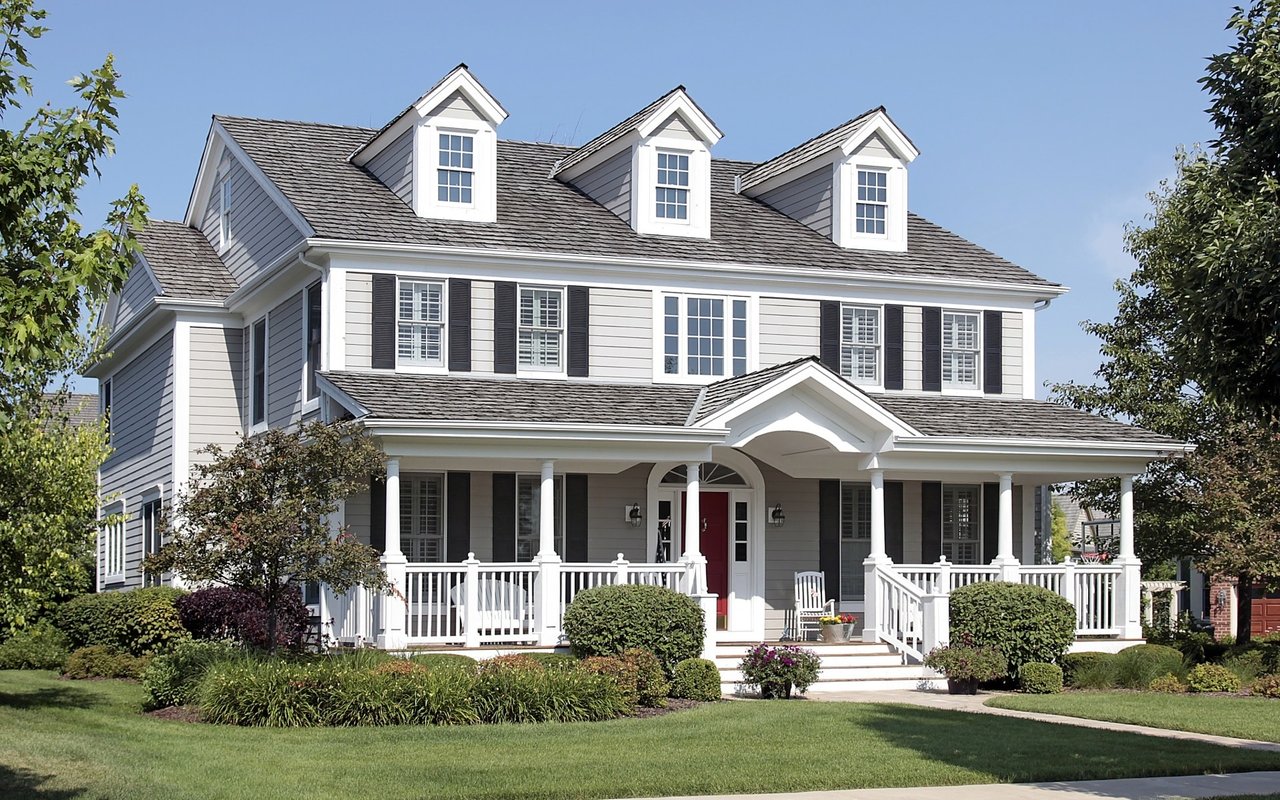
A large house with a pathway leading to the wraparound porch, surrounded by trees, bushes, and a green lawn.

Mortgage Rates

Coming Soon!

Let’s Start a Conversation

Connect with a real estate professional who values trust, insight, and personal attention. Every step is guided by a deep understanding of what “home” truly means.